
Introduction: Your Website Is Not Really About You
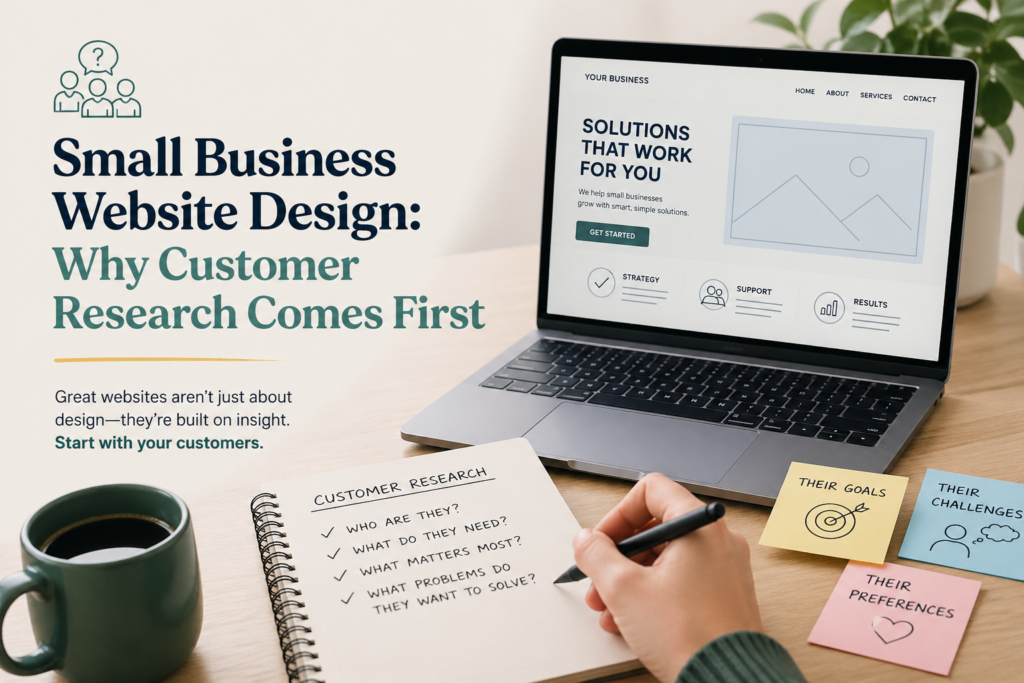
When a small business decides to create a website, the first instinct is often to start with visual choices: colors, fonts, images, layout, and design style. These things matter, but they are not the real starting point. A business website is not just a digital brochure or a place to “look professional.” It is a communication tool built for customers who are trying to solve a problem, compare options, and decide whether they can trust your business.
That is why the first question should not be, “What do we want our website to look like?” The better question is, “What does our customer need to understand before they contact us, book a service, request a quote, or make a purchase?”
For small businesses, this question is especially important because a website often has to do many jobs at once. It needs to explain what the business offers, show credibility, answer common questions, make contact easy, and guide visitors toward action. A local service company, a consultant, a small clinic, a home repair business, or a creative studio may not need a complex custom-built website from the beginning. What they need most is a clear, trustworthy, easy-to-manage website that helps customers take the next step.
This is where the choice of platform becomes important.
Many small business owners assume they need a fully custom website built from scratch. In some cases, that may be true. But for many small businesses, the smarter decision is to use a specialized business website builder. These platforms are designed to help businesses launch faster, organize content clearly, manage pages without technical knowledge, and update the website as the business grows.
Two strong examples are Wix and uKit.
Wix is a good fit for businesses that want flexibility, a modern visual editor, many design options, and the ability to build a website that can grow over time. It can work well for service businesses, consultants, local companies, restaurants, studios, and professionals who need more control over design and presentation.
uKit is another practical option for small businesses that want a simpler, business-focused website builder. It is often suitable for companies that need a clean website with essential pages: services, about, portfolio, contact form, testimonials, and basic lead generation.
The key point is not that every small business should choose the same platform. The key point is that the platform should match the needs of the audience and the goals of the business. A website for a local contractor, for example, should make it easy to see services, past work, service areas, reviews, and a quote request form. A website for a consultant should highlight expertise, case studies, client outcomes, and a clear way to schedule a conversation. A website for a small retail business may need product pages, promotions, location details, and simple contact options.
Customer research helps make that decision easier.
Before choosing a template, platform, or design direction, small businesses should understand what their customers actually look for online. Do they care most about pricing? Reviews? Location? Before-and-after examples? Credentials? Response time? Service guarantees? If you know what matters to your customers, you can choose the website platform and structure that best supports those needs.
A good small business website is not built around what the owner wants to say first. It is built around what the customer needs to know first. Specialized website builders like Wix and uKit can make this process more accessible because they allow business owners to focus less on technical complexity and more on the message, structure, trust signals, and customer journey.
In other words, the best website platform is not simply the one with the most features. It is the one that helps your business communicate clearly, earn trust, and turn visitors into real customers.
The Common Mistake: Designing Before Understanding
One of the most common mistakes small businesses make is starting the website process with design before research. A business owner may choose a template because it looks attractive, write website copy based on internal language, or organize pages according to how the company sees itself.
But customers often see things differently.
A business may want to talk about its history, values, or full list of services. A visitor may simply want to know: Can you solve my problem? Are you close to me? How much does it cost? Can I trust you? What happens after I contact you?
When the website does not answer those questions quickly, visitors leave. They may not call, fill out a form, or read more. They simply move on to another business that feels clearer and easier to understand.
This is why customer research should come before design. Research helps reveal what visitors actually need from the website. It helps a business avoid guessing and instead build pages, messages, and calls to action around real customer expectations.
A beautiful website can still fail if it does not speak to the right audience. A simple website can perform very well if it answers the right questions in the right order.
What Customer Research Means for a Small Business Website
Customer research does not always mean a large, expensive study. For a small business, it can be practical, simple, and highly useful.
Customer research means listening carefully to the people you serve or want to serve. It means understanding their problems, questions, motivations, concerns, and decision-making process before building or redesigning your website.
This can include short surveys, customer interviews, reviews, website analytics, contact form messages, sales calls, support questions, and conversations with people who chose your business or decided not to.
For example, a small business might ask recent customers why they selected the company, what information they looked for before making contact, and what almost stopped them from moving forward. These answers can reveal what the website should emphasize.
If customers repeatedly mention trust, the website may need stronger testimonials, team photos, certifications, and case studies. If customers ask about pricing, the website may need a pricing guide or a clear explanation of how quotes are created. If customers are confused about services, the website may need simpler service pages and better navigation.
The goal of customer research is not to collect information for the sake of information. The goal is to make better website decisions.
Customer Research Helps You Choose the Right Website Pages
Many small business websites include pages because “every website has them.” Home, About, Services, Contact, and maybe Blog. These pages can be useful, but the real question is whether they match the customer journey.
Customer research helps identify which pages your audience actually needs.
A local service business may need service pages, service area pages, reviews, project examples, FAQs, and a quote request form. A professional consultant may need an About page, expertise sections, case studies, testimonials, and a consultation booking page. A small clinic may need provider information, appointment details, insurance information, location details, and patient FAQs.
Without research, businesses often overbuild or underbuild. They may create pages nobody needs while leaving out information that customers actively search for.
A research-informed website structure may include:
Service pages that explain exactly what the business offers.
Pricing or quote information that reduces uncertainty.
FAQ sections that answer common concerns before a customer calls.
Testimonials that build confidence.
Case studies or project examples that show real results.
Contact or booking pages that make the next step simple.
The right pages depend on the business, but the method is the same: start with what customers need to know, then build the site around that.
Customer Research Makes Your Website Copy More Persuasive
Website copy works best when it sounds familiar to the people reading it. That does not mean it should be casual or unprofessional. It means the language should match how customers describe their own problems and goals.
Many businesses write from an internal point of view. They use industry terms, technical descriptions, or broad claims such as “high-quality service,” “trusted solutions,” or “customer-focused approach.” These phrases may be true, but they are often too general to persuade.
Customer research gives you more specific language.
For example, customers may not say they need “comprehensive residential maintenance solutions.” They may say, “I need someone reliable who can fix this quickly and not surprise me with extra charges.”
That sentence tells you much more about what the website should communicate. It points to reliability, speed, transparency, and pricing confidence.
Research helps identify the words customers use, the objections they have, and the outcomes they care about. This can improve headlines, service descriptions, calls to action, FAQs, and contact forms.
Instead of writing only about what the business does, the website can speak directly to what the customer wants to achieve.
Customer Research Improves Website Navigation
Navigation is not just a design element. It is part of the customer experience.
When visitors arrive on a small business website, they should be able to understand where to go next without effort. If they have to think too hard, search too long, or click through too many unclear pages, they may leave.
Customer research helps businesses understand the natural order of questions visitors have.
For example, a potential customer may first want to know what services are offered. Then they may want to see examples of work. After that, they may check reviews, pricing, location, and availability. Finally, they may look for a way to request a quote.
A good website navigation structure supports that path.
This does not mean every website should have the same menu. It means the menu should reflect the way customers make decisions.
For many small businesses, simple navigation works best:
Home
Services
Projects or Case Studies
Reviews
About
FAQ
Contact
For businesses using website builders like Wix or uKit, this type of structure is relatively easy to create and manage. The important part is not just choosing a template, but organizing the template around the customer journey.
Good navigation reduces friction. It helps visitors move from curiosity to confidence to action.
Customer Research Builds Trust
Trust is one of the most important parts of a small business website. Visitors are often asking themselves, quietly: Is this business real? Are they professional? Have they helped people like me? Will they respond? Can I trust them with my money, time, home, health, or project?
Customer research helps identify what trust signals matter most to your audience.
For some businesses, trust may come from reviews and testimonials. For others, it may come from credentials, licenses, certifications, years of experience, project photos, community involvement, or clear explanations of the process.
A website should not simply say, “We are trusted.” It should show why.
This can include customer reviews, before-and-after examples, staff photos, professional affiliations, guarantees, transparent policies, local service areas, and detailed case studies.
For small businesses, trust is often built through specificity. A real photo is usually stronger than a generic stock image. A detailed testimonial is usually stronger than a vague quote. A clear process is usually stronger than a general promise.
Customer research shows which details matter most. Then the website can place those details where visitors need reassurance.
Simple Customer Research Methods Any Small Business Can Use
Small businesses do not need a large research department to make better website decisions. Even a small amount of structured feedback can be valuable.
One simple method is to speak with recent customers. Ask five to ten people why they chose your business, what they compared you with, and what information helped them decide. These conversations can reveal patterns quickly.
Another method is to review past emails, phone calls, and contact form messages. The same questions often appear again and again. Those questions should become website content, especially in service pages and FAQ sections.
Online surveys can also help. A short survey with five to seven questions can give customers a simple way to share what they expected, what they found helpful, and what was missing from the website.
Competitor research is useful too. Reading reviews of similar businesses can show what customers praise, complain about, or wish they had known earlier.
Website analytics can also provide clues. If visitors often leave from a certain page, that page may be unclear. If many visitors go to the contact page but do not submit the form, the form may feel too long or the offer may not be clear enough.
The goal is not to collect perfect data. The goal is to reduce guessing.
Questions to Ask Before Building or Redesigning a Website
Before building a new website or redesigning an existing one, small businesses should ask customer-centered questions.
Here are useful questions to start with:
What problem were you trying to solve when you found our business?
This helps identify the real reason customers search for you.
What information did you need before contacting us?
This shows what content should be easy to find.
What almost stopped you from choosing us?
This reveals objections, doubts, and missing trust signals.
What made our business feel trustworthy?
This helps identify which credibility elements should be highlighted.
What other options did you compare us with?
This gives insight into competitors and customer expectations.
What would you expect to see on a website like ours?
This can reveal missing pages, features, or explanations.
Was anything confusing about our services, pricing, or process?
This helps improve website copy and page structure.
What would have made contacting us easier?
This can improve forms, buttons, phone placement, booking options, and calls to action.
These questions are simple, but the answers can shape the entire website strategy.
Turning Research Into Website Decisions
Customer research becomes valuable when it leads to action.
If customers say they are unsure about pricing, the website may need a pricing explanation, starting rates, package examples, or a “request a quote” page that explains what affects cost.
If customers say they want proof of experience, the website may need stronger case studies, project photos, industry examples, or testimonials.
If customers say they do not understand the process, the website may need a “How It Works” section with three or four clear steps.
If customers say they want to know who they will work with, the website may need better team photos and staff bios.
If customers say they are worried about response time, the website may need a clear message such as “We respond within one business day” or a booking form that confirms the next step.
This is also where website builders can be especially useful for small businesses. Platforms like Wix and uKit make it easier to adjust pages, test new content, add FAQs, update testimonials, and refine calls to action without rebuilding the entire website from scratch.
A website should not be treated as a one-time project. It should improve as the business learns more about its customers.
Research gives direction. The website turns that direction into structure, content, and action.
Conclusion: Better Research Leads to Better Websites
A successful small business website is not just attractive. It is clear, useful, trustworthy, and built around the people it is meant to serve.
Customer research helps small businesses make smarter decisions before they choose a design, write content, organize pages, or select a website platform. It helps answer the questions that matter most: What do customers need to know? What builds trust? What creates confusion? What makes someone ready to contact the business?
Specialized business website builders like Wix and uKit can be a practical choice because they allow small businesses to create professional websites without unnecessary technical complexity. But the platform is only part of the solution. The real strength of a website comes from how well it understands the customer.
When a website begins with customer research, it becomes more than an online presence. It becomes a tool for communication, trust, and growth.